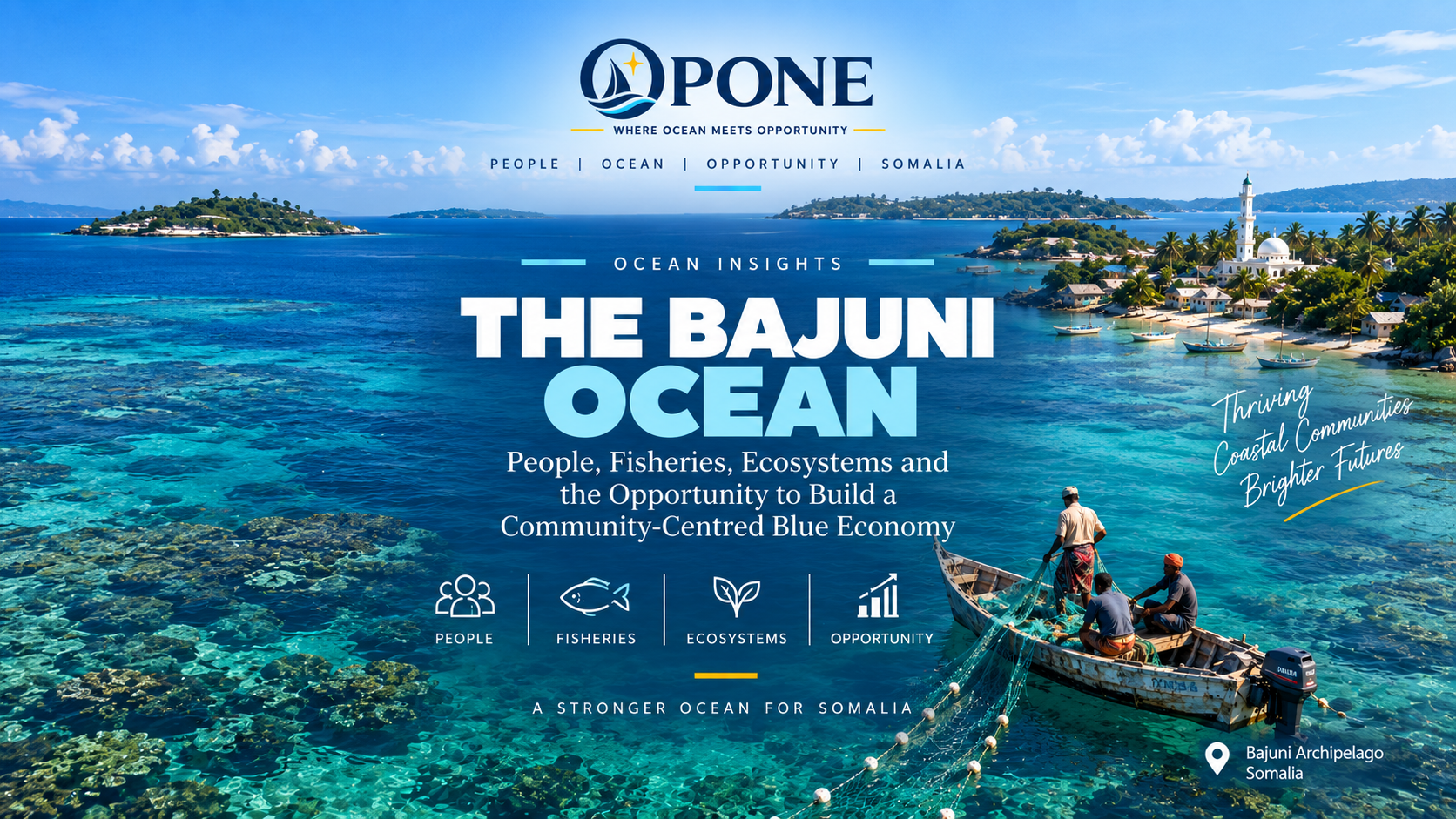
People, Fisheries, Ecosystems and the Opportunity to Build a Community-Centred Blue Economy
By OPONE Ocean Insights
September 2026
The ocean is more than water
When Somalia’s ocean economy is discussed, the conversation often starts with the size of the coastline, the country’s fisheries potential, its position along major maritime routes, or the economic opportunities associated with the sea. All of this matters. None of it tells the whole story.
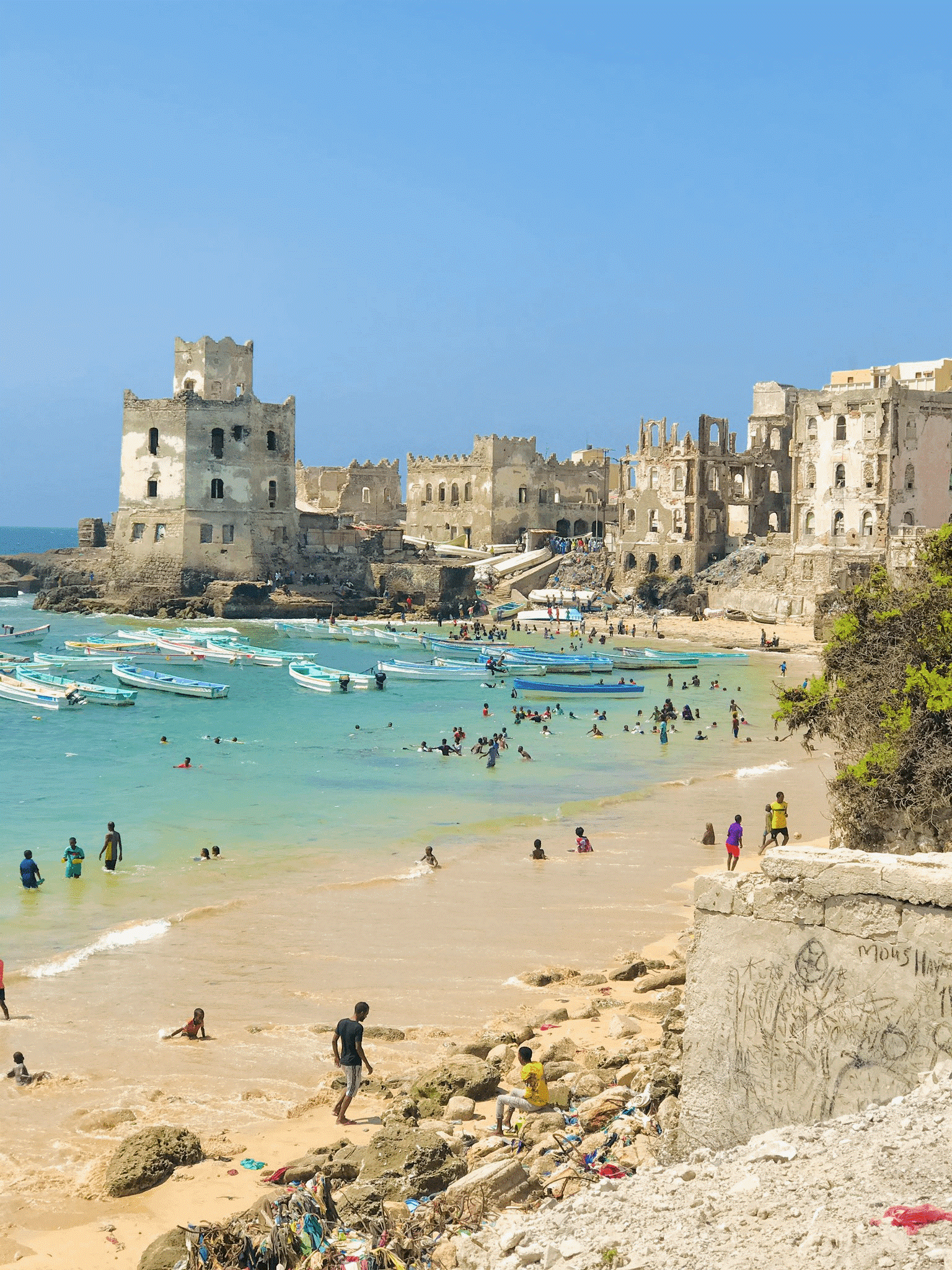
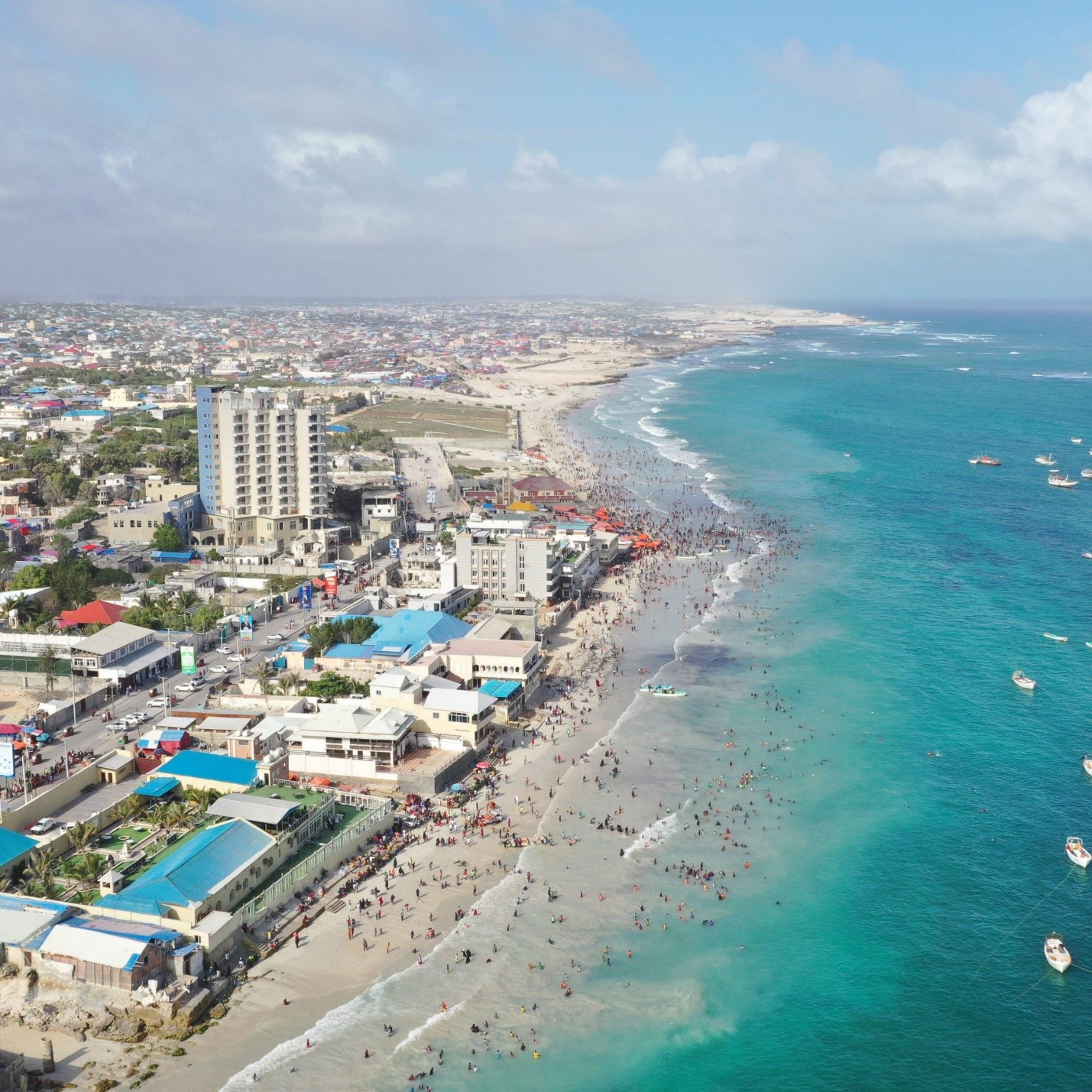
Along Somalia’s southern coast, the relationship between people and the ocean is far more intimate. Communities have built livelihoods, knowledge, traditions and economic activity around the sea for generations. Fishing grounds connect to landing sites, landing sites connect to markets, and those markets connect to transport, cold storage, processing and trade. At the same time, the productivity of these fisheries is tied to the condition of the marine ecosystems around them.
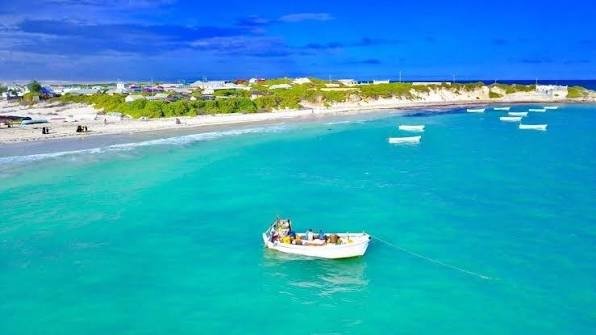
The Bajuni Archipelago offers a particularly useful lens for understanding this relationship. Located along Somalia’s southern coast, it is a landscape of islands, islets, channels and surrounding marine environments — and equally a human landscape, where coastal communities have developed a longstanding relationship with fishing, seafaring and maritime trade. Scientific and environmental studies have documented coral reefs, seagrass meadows, mangroves and other coastal habitats within the wider southern Somali coastal environment.
To view the Bajuni Islands only as a collection of remote islands would miss the larger story. The more useful question is how people, fisheries, ecosystems and markets function together as one coastal system — and what that means for the future of Somalia’s Blue Economy.
A community whose history is connected to the sea
The Bajuni are a longstanding coastal community associated with southern Somalia, including the islands and coastal settlements around Kismayo. Their history and livelihoods have been closely tied to the sea through fishing, seafaring, trade and other maritime activities, and their cultural identity includes a distinctive linguistic heritage associated with Kibajuni. Research on Bajuni cultural heritage has documented the importance of these maritime traditions and the challenges involved in preserving them.
This history matters, because coastal communities are sometimes introduced into Blue Economy discussions only as people vulnerable to climate change, poverty or declining natural resources. Those challenges are real, but that framing alone is incomplete. The Bajuni community also holds knowledge accumulated through generations of interaction with the marine environment — of fishing locations, seasonal conditions, species, tides, weather, navigation, processing and local trade. That knowledge is a resource in its own right.
The future of the Blue Economy should not be designed solely around what outside institutions believe coastal communities need. It should also ask what communities already know, what enterprises already exist, what constrains those enterprises from growing, and how local knowledge can inform better economic and environmental decisions.
That shift in perspective matters. Communities are not simply beneficiaries of the Blue Economy. They can be participants, knowledge holders, entrepreneurs and stewards of the systems on which it depends.
The archipelago is a connected system
The Bajuni Archipelago is geographically distinctive, but its importance cannot be understood from geography alone. The islands sit within a wider coastal system where human activity and marine ecosystems are closely linked. Research on Somalia’s Indian Ocean coast has documented coral reef environments around the archipelago, while seagrass and mangrove habitats occur along the wider southern coast. Earlier assessments described the Bajuni area as a complex environment of islands, islets, shallow marine areas and associated coastal habitats.
These ecosystems are not separate from the fisheries economy. They form part of the ecological foundation on which marine life and coastal livelihoods depend.
That is why a fisheries strategy focused only on catch volumes offers an incomplete picture. If the habitats supporting marine life change, the fisheries economy changes with them. If coastal ecosystems deteriorate, dependent communities face increasing pressure. Conversely, healthy ecosystems continue to provide the ecological functions that support fisheries and coastal resilience.
This creates a simple but important relationship: the fishery has a home. Understanding that home is part of understanding the fishery. For the Bajuni Archipelago, future research should not treat fisheries, coral reefs, seagrass, mangroves and coastal communities as separate subjects, but as interconnected components of the same coastal system.
The fish is valuable. The value chain should be too.
There is another side to the fisheries question that deserves more attention: where the economic value of the catch is created, and where it is captured.
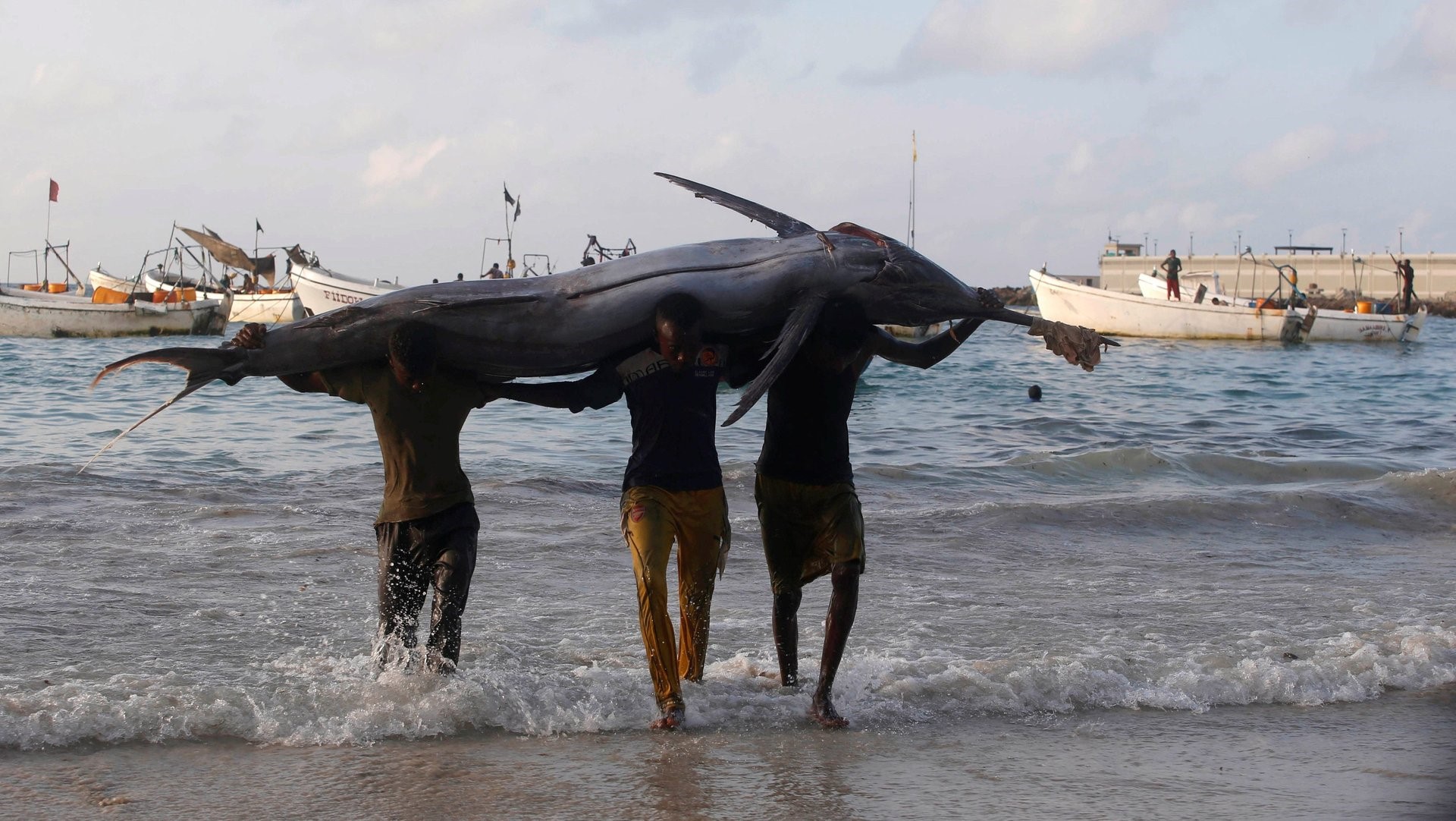
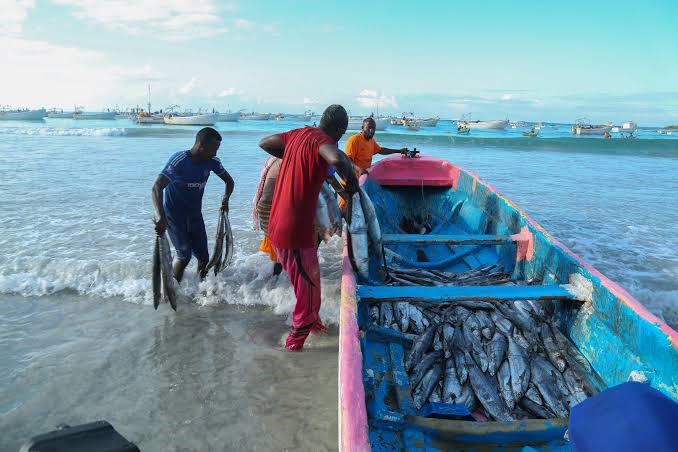
For a fisher, the economic journey does not end when a fish is brought ashore. From the moment of landing, its value is shaped by handling, icing, storage, transport, processing, market information, buyer relationships and access to consumers. A simplified fisheries value chain looks like this:
Fishing → landing → handling → ice and cold chain → processing → transport → market → consumer
Weakness at any point in that chain reduces the value of the final product — a particular risk in island and remote coastal communities, where distance from major markets and limited infrastructure can make preservation and transport difficult.
These challenges have already been recognised in the Bajuni Islands. In 2020, FAO and partners provided fishing equipment, cold boxes, fish-processing packages and training to more than 700 beneficiaries in Kismayo and the Bajuni Islands, and installed solar-powered ice machines on Madhawa Island and in Kismayo. FAO reported that the Madhawa facility created local employment and helped fishers preserve their catch for longer periods.
The significance of interventions like these extends beyond the infrastructure itself. Ice changes how long fish stays in good condition. Better handling affects quality, and quality affects the price a product can command. Processing can add value before a product leaves the community, and reliable transport connects producers to larger markets.
In other words, fisheries development is not simply about catching more fish. It is also about improving the system that allows fishers and coastal enterprises to retain and create more value from what they already produce. This is where the Blue Economy becomes an enterprise question, not only a resource question.
The fishery has an ecosystem beneath it
The economic value of fisheries ultimately rests on an ecological foundation. Mangroves, seagrass meadows and coral reefs perform different ecological functions but remain connected within coastal environments. Healthy mangrove systems can provide habitat for aquatic species and support coastal protection and water-quality functions. Seagrass ecosystems provide habitat and nursery functions of their own, while coral reefs support diverse marine communities and contribute to coastal productivity.
The point is not to assign a single economic value to each ecosystem. It is to recognise that the fisheries economy is embedded within an ecological system — with real consequences for how investment and development should proceed.
A new fisheries enterprise may create jobs and income, but if the environmental foundation supporting the fishery is ignored, the economic model becomes increasingly exposed to ecological change. Equally, stewardship that protects ecosystems without creating pathways for sustainable economic participation may fail to address the livelihood realities of coastal communities.
The opportunity lies in connecting the two. Ocean stewardship and fisheries development are not opposing objectives — properly understood, stewardship is part of the foundation of a productive and resilient fisheries economy.
The missing piece may be knowledge
One of the most important questions facing Somalia’s Blue Economy is not simply what resources exist, but how well we understand them.
Somalia has institutions and programmes already working to improve fisheries and environmental information. The Federal Government and FAO have been developing the Fisheries Information Management System (FIMS) to strengthen fisheries data collection, storage, analysis and reporting, after FAO identified the lack of centralised, harmonised fisheries information as a significant obstacle to effective management. That work matters, because a functioning Blue Economy depends on reliable information.
For the Bajuni Archipelago, the knowledge question extends beyond fisheries statistics. A stronger understanding of the region would connect information about where fishing takes place, what species are landed, how catches move through the value chain, where cold-chain and processing facilities sit, how markets operate, where important marine habitats occur, and how communities themselves describe changes in their environment and livelihoods.
Some of these questions have been studied individually. What remains valuable is bringing them together — not to create another isolated dataset, but to build a more connected picture of the coastal system, one that can help communities, enterprises, researchers, policymakers and investors understand both opportunities and constraints.
This is where Ocean Intelligence has a practical role to play. Its purpose is not data for its own sake, but the transformation of fragmented information into knowledge that supports better decisions.
From knowledge to opportunity
Viewed as a connected social, ecological and economic system, the Bajuni Archipelago’s Blue Economy opportunity extends well beyond fishing. It could involve improving access to fisheries services and markets, strengthening cold-chain and post-harvest systems, developing responsible processing and value addition, improving market information, supporting local enterprises, creating opportunities for women and young people, documenting community knowledge, and strengthening understanding of the ecosystems underpinning fisheries.
None of these opportunities should be assumed viable simply because they sound attractive. They require evidence, local participation, sound economics and attention to environmental sustainability. That is why the first step should usually be understanding the system before attempting to scale any intervention.
Where OPONE fits
OPONE approaches this opportunity from a specific starting point. We are a fisheries-led Blue Economy startup, and fisheries are our entry point into the wider ocean economy. Our interest lies in the connections around fisheries: the people who produce, the services they require, the markets they access, the value chains through which products move, and the ecosystems that sustain the resource.
That means looking at the Blue Economy through four connected dimensions — people, fisheries, markets and ocean stewardship. Our role is not to replace government, scientific institutions or community organisations, but to connect enterprise development with market access, knowledge and stewardship, while helping make information about Somalia’s ocean economy more accessible and useful.
Our emerging engagement with the Lag Badana Community Conservancy Trust around Buurgaabo and the Bajuni Islands reflects this direction. The collaboration is being explored around mapping, research and documentation of coastal and marine ecosystems. This is an early-stage engagement, not a claim of a completed field assessment — a distinction that matters. At this stage, the purpose is to listen, understand, document, identify research questions, and explore where community knowledge, scientific evidence and Blue Economy enterprise can reinforce one another.
What should we understand next?
The Bajuni Archipelago deserves research that looks at the whole system rather than isolated pieces of it. We need to understand the fisheries more clearly — species, fishing patterns, landing locations, seasonal dynamics. We need to better understand how fish moves from the water to consumers, and where value is created or lost along the way. We need stronger spatial knowledge of mangroves, seagrass and coral reefs, together with information about their condition and the pressures affecting them.
We also need to understand the human economy surrounding these resources: who participates in fishing, processing and trade; what roles women and young people play; which services are available; what infrastructure is missing; and which markets can realistically be reached.
Just as importantly, local knowledge needs to be part of this process. A map produced from satellite imagery can show a coastline. A landing record can show a catch. A market survey can show a price. But none of these, alone, can explain the complete relationship between a community and its ocean. That requires bringing different forms of evidence together.
The opportunity ahead
The Bajuni Ocean should not be reduced to a story about either conservation or economic development. It is both an ecological system and an economic system, and people sit at the centre of that relationship.
The challenge is to develop economic opportunities without weakening the ecological foundation that supports them, while ensuring coastal communities are not left outside the value created from the resources around them. That requires better information, stronger value chains, responsible enterprise, community participation, and stewardship of the ocean itself.
For Somalia, the larger lesson is significant. The Blue Economy will not be built simply by looking out at the sea and asking what resources are there. It will be built by understanding the systems beneath the surface and the people connected to them.
The Bajuni Archipelago gives us a place to begin that conversation.
The Bajuni Ocean
The Bajuni Islands are more than islands. They are communities connected to the sea, fisheries connected to markets, and economies connected to ecosystems. Their future will depend not on any single project or intervention, but on how well these connections are understood and how responsibly new opportunities are developed.
For OPONE, the direction is clear: fisheries are our entry point, communities are our partners, Ocean Intelligence is our knowledge engine, ocean stewardship protects the foundation, and the Blue Economy is the long-term opportunity.
OPONE — Where Ocean Meets Opportunity
BADDEENA. FURSADEENA.