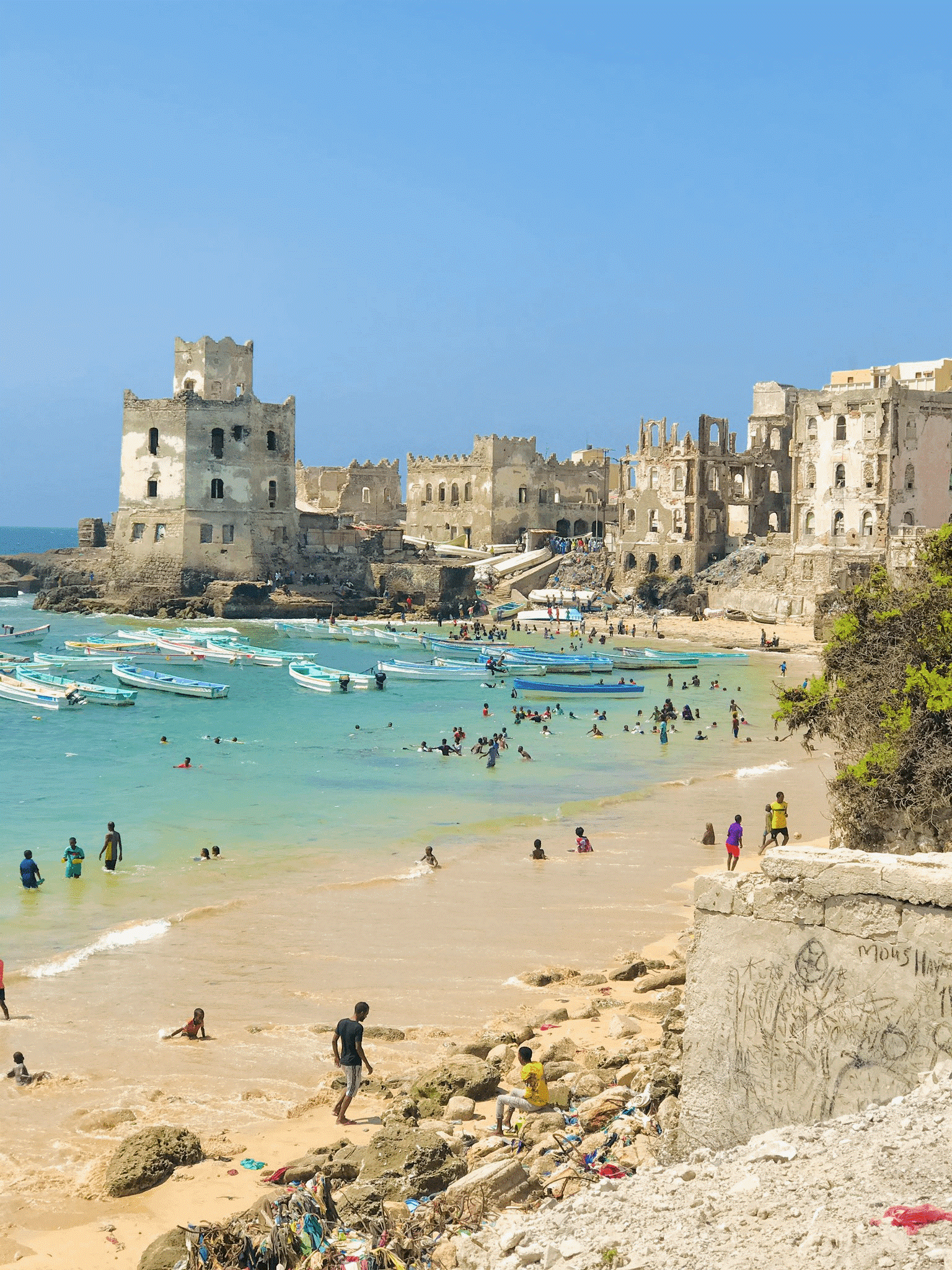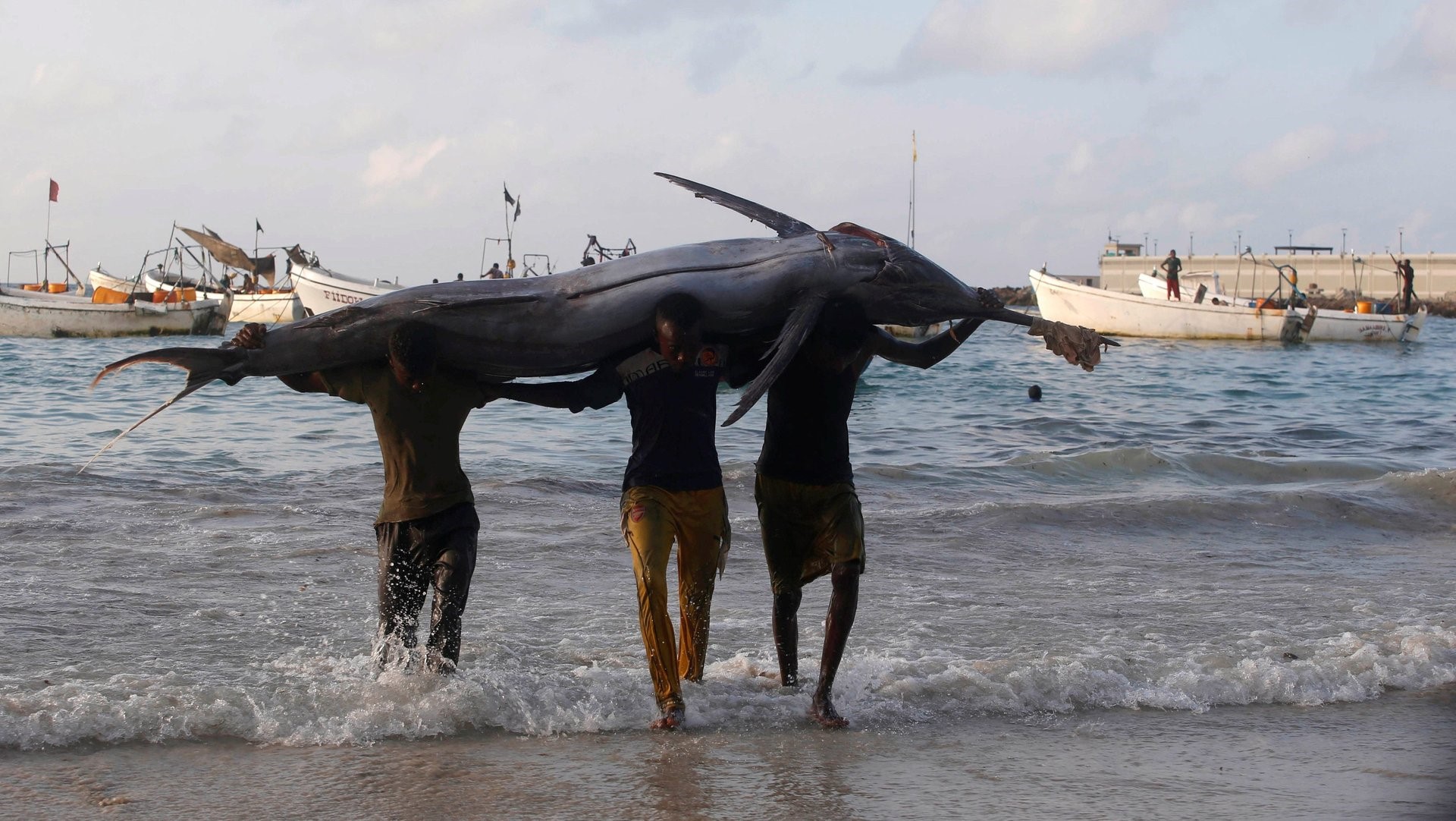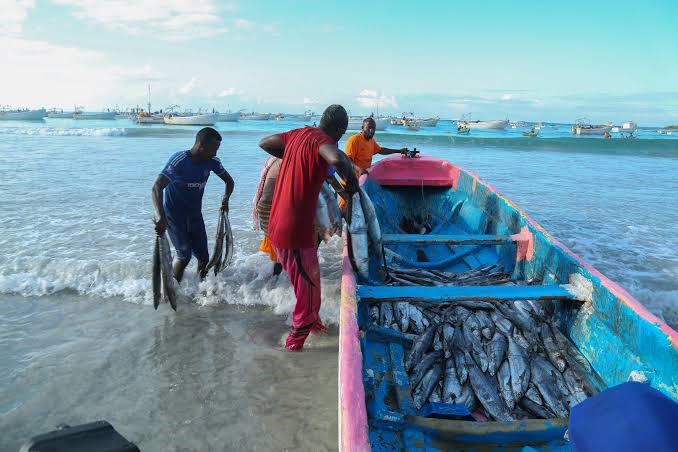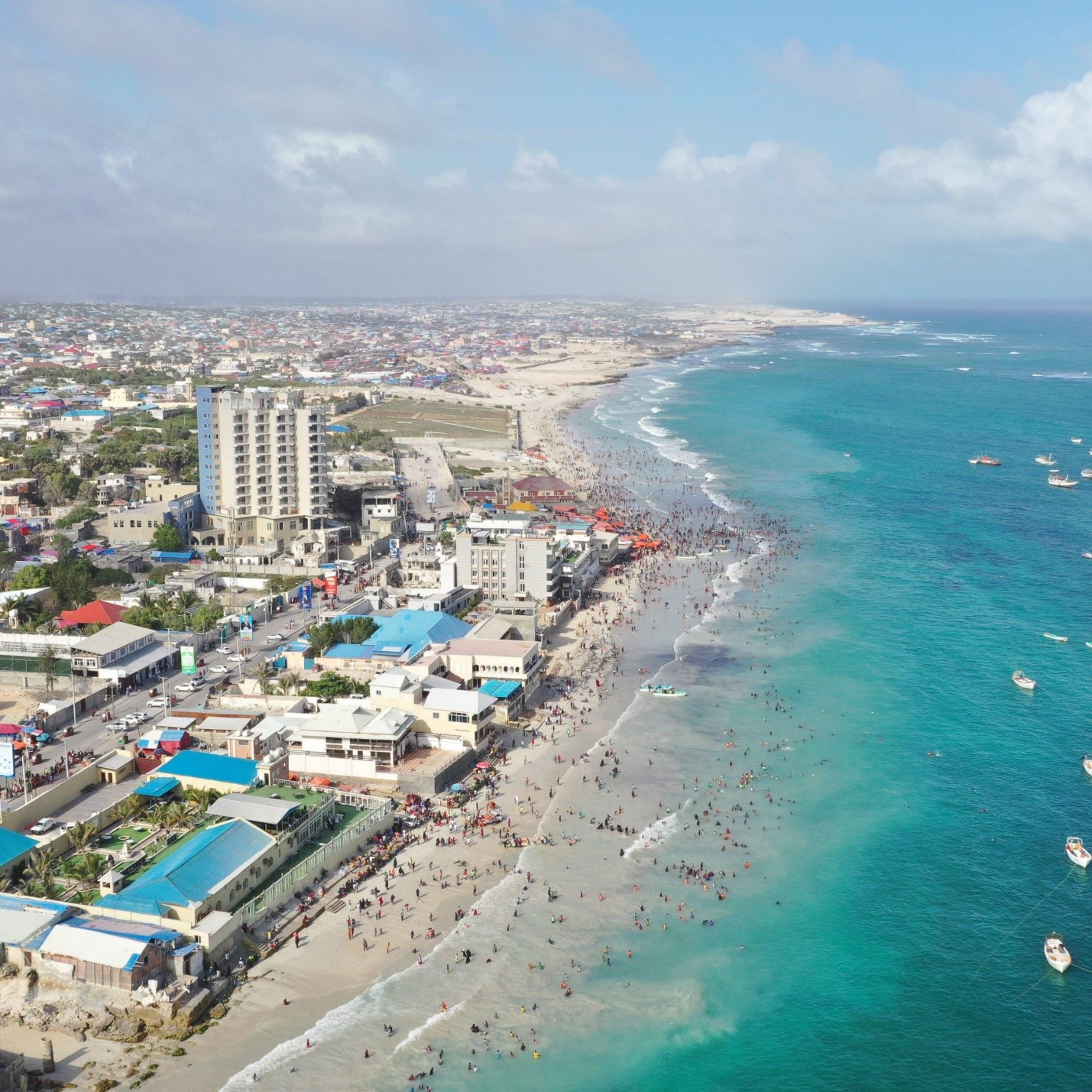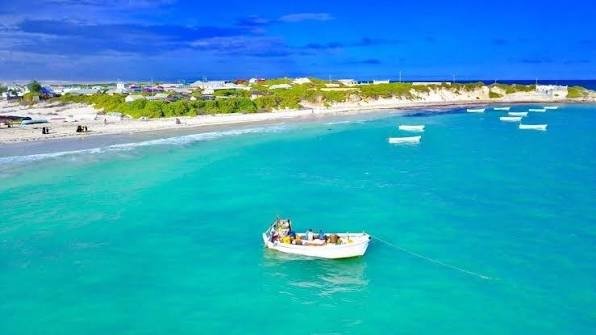
What lies beneath the water supports what happens above it.
OPONE | Ocean Insights
Somalia’s ocean story is often told through fish: the species caught, the boats that land them, the markets that receive them, and the economic potential of the country’s long coastline.
But fish do not begin at the landing site.
Before a fish reaches a boat, a market or a cold chain, it depends on an ecological system beneath the water. Among the most important components of that system are coral reefs. Somalia has them. What Somalia does not yet have is an equally strong national evidence base for understanding them.
That distinction matters.
A reef is more than coral
A coral reef is easy to imagine as a colourful underwater structure. Scientifically, it is much more than the coral organisms that build it. Reef environments bring together corals, algae, fish, invertebrates, sediments and other organisms within a complex physical and biological system. The structure created by corals provides habitat and shelter, while the surrounding environment supports feeding, reproduction and movement of marine organisms. For coastal communities, this ecological complexity translates into something tangible: fish, food, livelihoods and coastal protection.
Somalia’s national Marine Ecosystem Diagnostic Analysis documented coral reefs along the Indian Ocean coast and identified fringing reefs in the Bajuni Archipelago, while also recording coral patches along the Gulf of Aden. The assessment documented 27 coral genera and 63 species in the areas covered by the available evidence — but the historical research itself cautioned that the coral fauna had not been completely studied.
That caveat is as important as the number. The 63 species should not be treated as a definitive national inventory. It is evidence of documented diversity within an incomplete scientific record — and that incomplete record is one of the most important stories surrounding Somalia’s reefs.
Somalia’s reefs are shaped by an unusual ocean
Somalia’s coral ecosystems cannot be understood by looking at a map of tropical reefs elsewhere. The Somali coastline is influenced by one of the world’s distinctive oceanographic systems: the Somali Current and its seasonal upwelling.
Along the southern Somali coast, oceanographic processes generate high biological productivity. The continental shelf contains a mosaic of coral reefs, seagrass meadows, mangroves, beaches and estuaries. Historical studies found that reef development changes substantially along the coast, with the southern shelf — particularly around the Bajuni Archipelago — offering conditions that allow more complex reef development.
This helps explain an important feature of Somalia’s reef geography: coral development is not uniform along the entire coastline. Historical research found fringing reefs extending offshore between Adale and the Kenya border, with a major interruption around Mogadishu, where corals occur more as patch reefs within seagrass environments. South of the Juba River, the broader continental shelf and the Bajuni barrier-island system create greater environmental diversity.
In other words, Somalia’s reef story is not one reef. It is a series of different coastal environments shaped by oceanography, geology, currents, depth, sediment and habitat connectivity — which is exactly why national mapping and site-specific research matter so much.
The Bajuni Archipelago reveals a bigger story
If there is one place that deserves particular attention in understanding Somalia’s coral ecosystems, it is the Bajuni Archipelago.
Historical geological and ecological research describes the Bajuni barrier-island system as a complex landscape of islands, marine passes, coastal sounds, tidal channels, mangroves, seagrass meadows and coral formations. Coral development varies across these environments: fringing reefs occur around some islands, coral carpets and patch reefs occur in others, and coral formations occur within or alongside Thalassodendron seagrass meadows.
This matters because it challenges how we tend to divide marine ecosystems into separate categories. On a map, coral reef, seagrass and mangrove can appear as distinct habitats. In nature, they are often parts of the same coastal system. The Bajuni Sound provides a striking example: historical surveys documented coral knobs and patch reefs occurring among seagrass beds, with the distribution of coral shaped by tidal currents and the physical structure of the environment.
This means studying the coral reef alone may tell us only part of the story. To understand the reef, we may also need to understand the seagrass meadow beside it, the mangrove channel behind it, the tidal exchange connecting them, and the fishing community that uses the surrounding waters.
The reef–seagrass connection
This is where Somalia’s emerging marine research story becomes particularly interesting. Our previous Ocean Insights article examined seagrass as natural fisheries infrastructure. Coral reefs extend that argument.
Seagrass meadows and coral reefs are not interchangeable ecosystems, and neither should be reduced to a single function. But in places such as the Bajuni coastal system, they occur within the same broader ecological landscape. Historical research found coral patches and table reefs within Thalassodendron meadows, while Somalia’s Blue Economy Assessment documents extensive southern seagrass and specifically identifies Thalassodendron and Syringodium in the Bajuni Sound.
This suggests a more useful way to think about Somalia’s coastal natural capital. The question is not simply where the coral reefs are. It is how the different habitats around them function together — a much more demanding research question, and a much more useful one for fisheries management.
From reef to fishery
The economic importance of a coral reef is not measured by the coral alone. Its value emerges through the ecological processes it supports. Complex reef structures create habitat for marine organisms, and reef-associated ecosystems can support fish populations and contribute to food security and livelihoods. In Somalia, this connection matters because artisanal and subsistence fishing remains deeply connected to coastal communities — Somalia’s national marine assessment identified extensive dependence on coastal and marine resources, alongside pressures from overfishing and destructive fishing practices.
This leads to a simple but consequential shift in perspective. We often ask how much fish Somalia can catch. We should also ask what ecological systems allow those fish populations to exist in the first place. The second question moves the fisheries conversation from extraction alone toward ecosystem productivity, habitat condition and natural capital.
That does not mean every fish caught in Somali waters depends directly on coral reefs, nor should reefs be presented as the sole foundation of Somalia’s fisheries — the country has diverse fisheries and oceanographic systems, including highly productive pelagic environments shaped by seasonal upwelling. The point is narrower and stronger: for reef-associated fisheries, the condition of reef habitat is part of the productive system, and that relationship deserves far better measurement.
Natural infrastructure
We recognise infrastructure easily when it is made of concrete and steel. A fishing port is infrastructure. A landing site is infrastructure. An ice plant, a cold chain, a road connecting a fishing community to a market — all infrastructure.
But a reef performs an infrastructural function too. Healthy coral reefs can reduce wave energy and contribute to coastal protection, helping buffer shorelines from waves and storm impacts — one of the widely recognised ecosystem services coral reefs provide globally. This does not mean a reef can replace a harbour or coastal engineering. It means that natural infrastructure and built infrastructure operate within the same coastal system, and degrading the natural system while investing heavily in the built one produces an incomplete approach to coastal development.
Somalia’s future coastal infrastructure should be considered in both dimensions: what are we building above the water, and what natural infrastructure already exists beneath it?
The knowledge gap is the real challenge
Perhaps the most important fact about Somalia’s coral reefs is not the number of species recorded. It is how old much of the foundational evidence is.
Some of the most detailed scientific descriptions of Somalia’s coral facies and reef environments come from research undertaken decades ago. The Bajuni Archipelago was studied in detail at the time, including its coral morphology, sedimentary environments and interaction with seagrass. Those studies remain valuable, but a historical description cannot substitute for a contemporary monitoring system.
Today, UNEP-WCMC’s Ocean+ Habitats platform confirms the presence of warm-water corals in Somalia but also states that there is insufficient data to assess national habitat condition. That distinction is important: knowing that a habitat occurs somewhere is not the same as knowing its current condition, extent, trajectory or ecological integrity. Closing that gap — not with another broad statement that “our reefs are important,” but with measurements — is the task ahead.
From observation to monitoring
There are encouraging signs that this transition is beginning. Somalia’s Marine Resources Research Centre announced a 2026 marine research programme that includes coral-reef monitoring and conservation, alongside fish-stock assessment and community-based fisheries management. A separate marine biodiversity survey announced by Somalia National University is intended to examine coastal biodiversity across sites from Berbera to Kismayo, including coral reefs, seagrass, mangroves and other marine habitats, with the stated ambition of building a national marine biodiversity atlas. Because this is an announced research programme, its findings should be treated as forthcoming rather than as an already completed national baseline.
These developments point toward an important transition: Somalia is moving from knowing that marine ecosystems exist toward building systems capable of measuring them. That transition matters more than producing another estimate without a monitoring framework behind it.
Climate change makes the baseline urgent
The need for better monitoring is not purely academic. Coral reefs are highly sensitive to changes in ocean temperature. When thermal stress becomes severe enough, corals can bleach, disrupting the symbiotic relationship that supports their energy balance, and severe or prolonged heat stress can lead to mortality.
Somalia is already included in NOAA Coral Reef Watch’s satellite-based monitoring system. In March 2026, Somalia was listed at Watch level, with the system tracking sea-surface temperature and accumulated heat stress; previous 2025 observations had reached higher alert levels.
But satellite alerts tell us something different from field monitoring. They can show where thermal stress is occurring — they cannot, by themselves, show how an individual Somali reef is responding. That requires observation on the reef itself: whether bleaching is occurring, which coral taxa are affected, how severe it is, how much coral dies, how quickly a reef recovers, which sites prove more resilient, what happens to associated fish communities, and how local pressures interact with climate stress. Without repeated observations, Somalia cannot easily distinguish a temporary disturbance from a long-term ecological decline.
A baseline, in other words, is not simply a scientific report. It is the beginning of a time series.
Coral reefs are not blue carbon
This distinction matters. As Somalia begins exploring its blue-carbon potential, there is a temptation to place every coastal ecosystem under the same carbon-finance narrative. We should resist that.
The established coastal blue-carbon ecosystems are primarily mangroves, seagrasses and tidal marshes. Coral reefs play an enormously important role in marine ecosystems, fisheries, biodiversity and coastal protection, but they should not simply be presented as another mangrove-style carbon-credit opportunity. Mangroves and seagrasses can store carbon; coral reefs support the wider coastal ecosystem in which these habitats function. The more interesting argument, then, is not:
Coral reefs → carbon credits
It is:
Coral reefs + seagrass + mangroves + fisheries + communities → connected coastal natural capital
Somalia’s Blue Economy Assessment itself emphasises the need for better information on the status and trends of coral reefs, mangroves and seagrasses when assessing coastal natural capital and carbon-related opportunities. That is the more credible pathway.
What should Somalia measure?
If Somalia wants to manage its marine resources as an economic asset, it first needs an evidence architecture — one that moves beyond maps showing where reefs may occur, toward a fuller picture:
- Where the reefs and associated habitats are distributed geographically
- What coral species, benthic communities and reef structures exist, and what biodiversity they support
- How healthy they are — live coral cover, algae, rubble, disease, bleaching and other condition indicators
- How they are changing, through repeated monitoring rather than one-time surveys
- What lives there — fish biomass, species composition and other reef-associated organisms
- Who depends on them — fishing communities and other coastal users
- What pressures exist — fishing practices, pollution, sedimentation, physical disturbance and climate stress
- What connects them — the relationships between reefs, seagrass, mangroves, lagoons and adjacent fishing grounds
- What their value is — fisheries, food security, coastal protection, biodiversity and other ecosystem services
Only with answers to these questions can management decisions become genuinely evidence-based.
The Bajuni question
The Bajuni Archipelago deserves particular attention because it offers something more valuable than a single reef: a natural laboratory for studying a connected coastal system. Historical research has already documented the coexistence and interaction of coral reefs, seagrass meadows, tidal channels, mangroves and barrier islands here, and Bajuni communities have longstanding relationships with these marine environments.
That creates an opportunity to bring together two forms of knowledge — scientific observation and local ecological knowledge — without romanticising traditional knowledge as an automatic substitute for measurement, and without treating communities simply as respondents to be surveyed.
The more productive approach starts with listening: where do fishers say fishing grounds have changed? What seasonal changes do they observe? Which habitats do they recognise, and which areas matter most for particular species? What changes have they tracked over decades? Then comes the scientific work — testing whether those observations can be mapped, and whether satellite imagery, ecological surveys and fisheries data corroborate them. That is where community knowledge becomes part of a serious evidence system, rather than an anecdote alongside one.
The next generation of Somali ocean research
Somalia does not need another narrative telling the world that its coastline is “rich.” It needs the evidence to demonstrate where that richness exists, how it functions, who depends on it, what threatens it, and how it can be managed.
Coral reefs provide an excellent test of this transition. The country already has historical scientific records, documented reef systems, evidence of coral diversity, communities whose livelihoods are connected to the sea, institutions beginning new marine research, and a growing policy conversation around fisheries, biodiversity and the Blue Economy. What remains is to connect these pieces.
From reef to resilience
The future of Somalia’s fisheries will not be determined only by how many boats enter the water. It will also depend on whether the ecological systems beneath those boats remain productive. That requires a different way of thinking about ocean development:
Not: extract → sell → repeat But: understand → protect → manage → create value → sustain
Coral reefs belong inside that equation. They are habitats. They are biodiversity. They are part of fisheries systems. They provide coastal protection. They are part of the natural capital of coastal communities — and, together with seagrasses and mangroves, they form part of the interconnected ecological infrastructure on which a functioning coastal economy depends.
For Somalia, the immediate opportunity is therefore not to put a price on every reef. It is to know the reefs first: map them, measure them, monitor them, understand the communities connected to them, the fish connected to them, and the habitats connected to them. Only then can Somalia decide what should be protected, what can be sustainably used, and where restoration or investment makes sense.
The ocean economy begins with an ocean we understand. That is the real opportunity beneath Somalia’s reefs.
OPONE | Ocean Insights
Know the Ocean. Create Value Responsibly.
BADDEENA. FURSADEENA.