Ocean Insights | Ports That Power Somalia’s Blue Economy
From maritime gateways to economic platforms
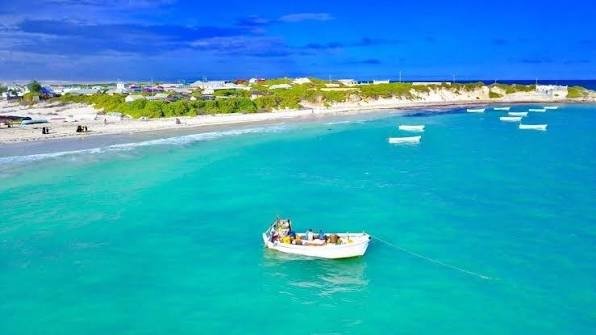
Somalia’s maritime infrastructure sits at the intersection of trade, logistics, fisheries and regional connectivity. The country’s Ministry of Ports and Marine Transport identifies port management, infrastructure development, shipping and logistics among its core mandates — a reflection of how central maritime transport has become to Somalia’s economic recovery and long-term growth. With roughly 3,333 kilometres of coastline, the longest on continental Africa, Somalia holds a maritime advantage few countries in the region can match. The question is no longer whether that advantage exists; it is whether the country can convert it into durable economic value.
A Network, Not Isolated Ports
Somalia’s principal maritime gateways include Mogadishu, Berbera, Bosaso and Kismayo, alongside emerging and developing facilities such as Hobyo and Garacad. Together, these ports form part of a wider coastal network with the potential to connect domestic markets to regional and international trade — and, increasingly, to attract long-term capital in their own right.
Mogadishu — the national gateway
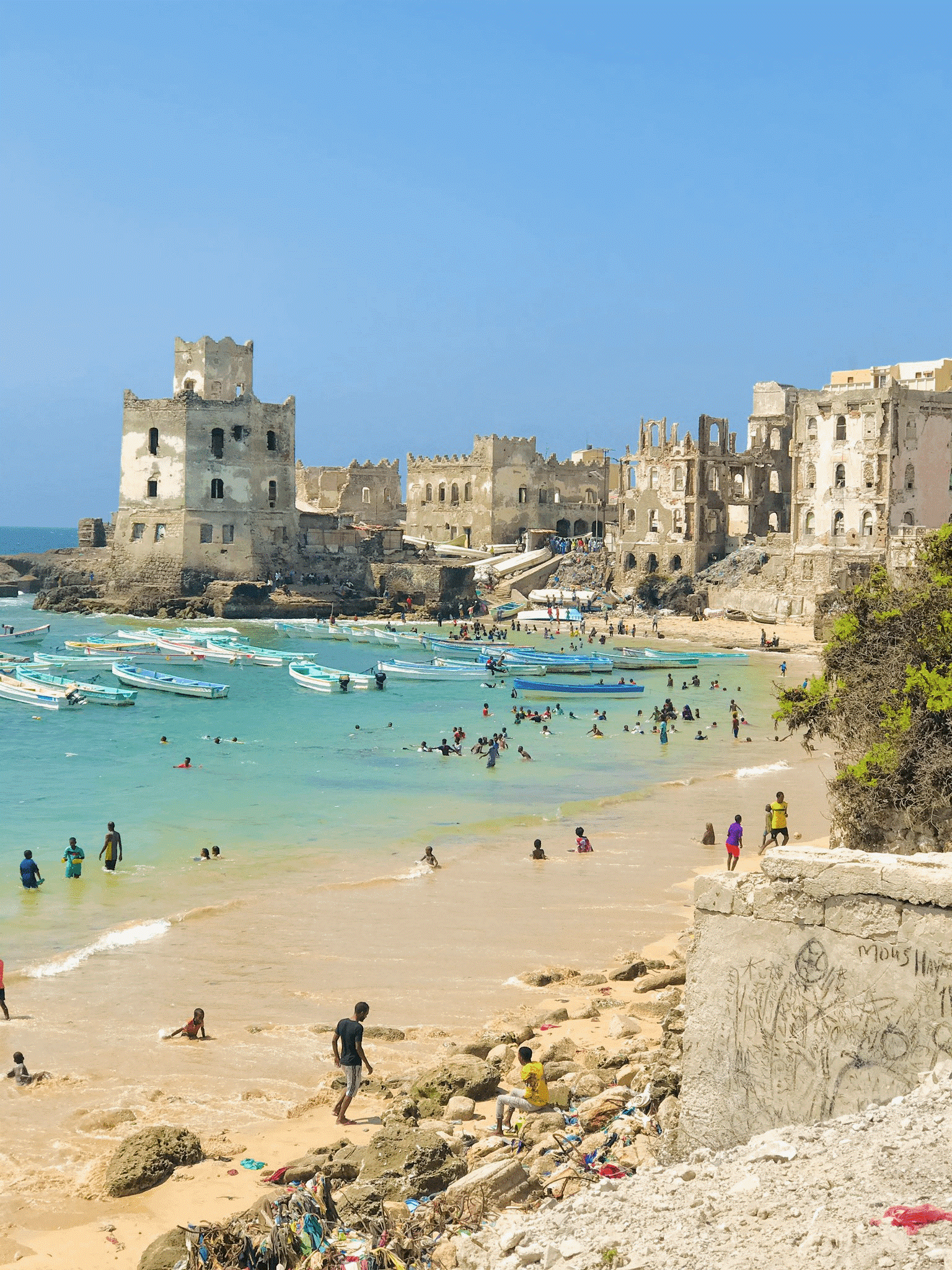
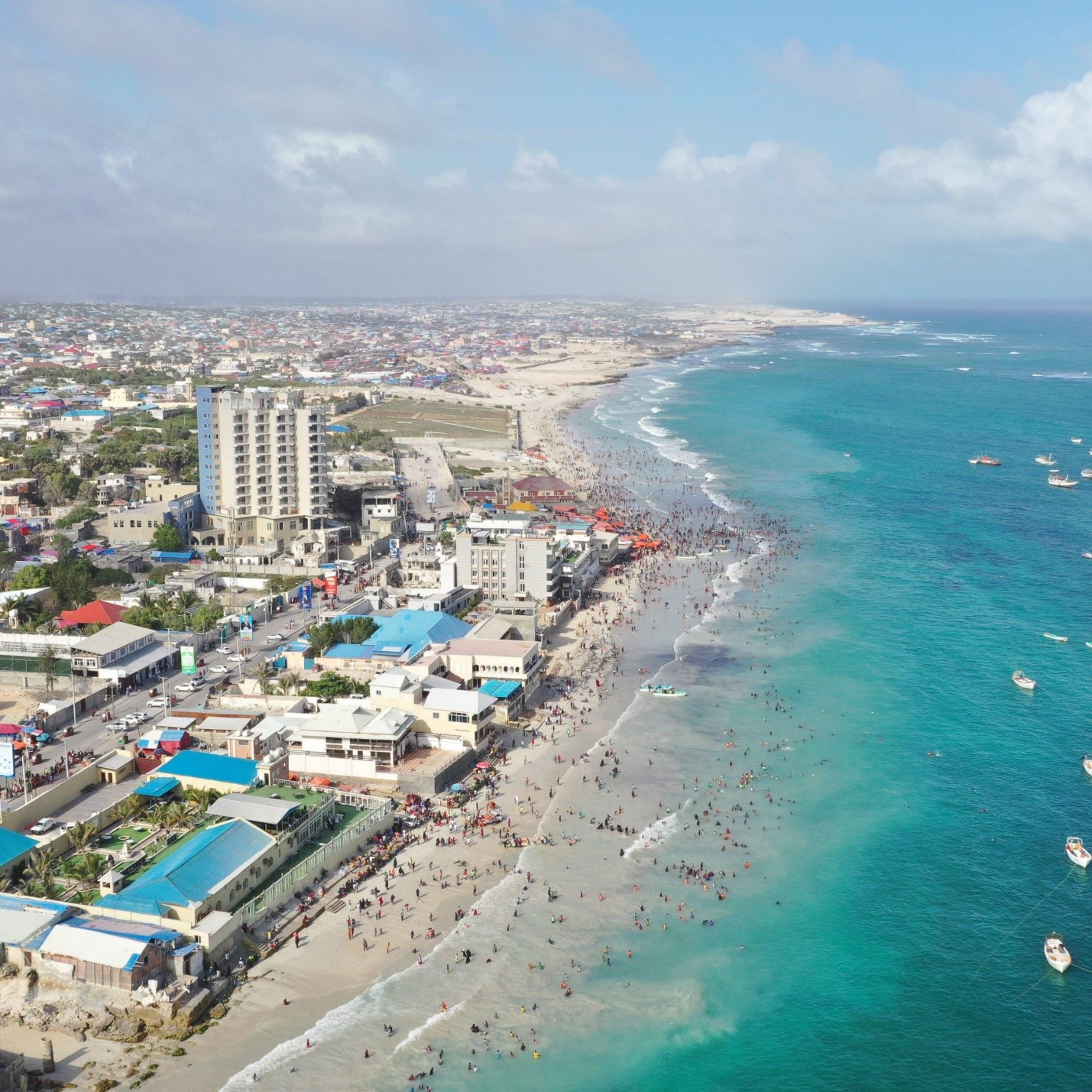
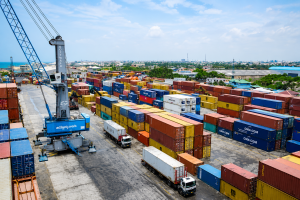
Mogadishu Port remains the country’s largest and most vital harbour, handling containers, general cargo, bulk and livestock. It now moves roughly 15 million tonnes of cargo a year and accounts for more than 70% of all containers entering or leaving the capital. A new container terminal has lifted annual handling capacity from around 150,000 to approximately 250,000 TEUs, yet demand is expected to outstrip that capacity in the short to medium term, given that container traffic has already doubled over the past eight years. The port’s constrained urban footprint, shallow draft and limited road access are now the binding constraints on further growth — the direct rationale behind the New Mogadishu Maritime Port described below.
Berbera — a regional trade and transit hub
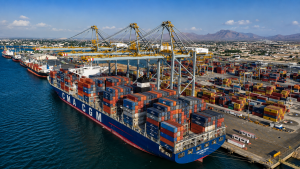
Berbera Port, positioned near the Bab el-Mandeb and major Red Sea shipping routes, has strategic significance that extends well beyond its immediate hinterland. Under a 30-year concession backed by up to $442 million in investment from DP World, the port’s container capacity has already grown from 150,000 to 500,000 TEUs, with a second-phase expansion under way to extend the quay to 1,000 metres and raise capacity to 2 million TEUs a year. The adjoining Berbera Economic Zone, modelled on Jebel Ali in Dubai, is projected to support trade equivalent to roughly 27% of Somaliland’s GDP and as much as 75% of regional trade by 2035, with the Berbera Corridor linking the port to Ethiopia’s landlocked market. Berbera is, in effect, the clearest proof point so far of what a port can become when infrastructure, a dedicated economic zone and corridor connectivity are developed together.
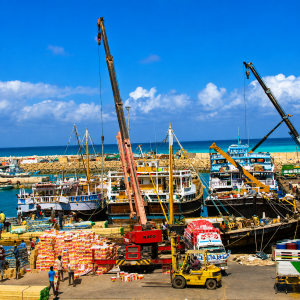
Bosaso — Puntland’s commercial gateway
Bosaso Port serves as an important maritime gateway for Puntland and has historically supported livestock exports and commercial connectivity across the Gulf of Aden, remaining a critical artery for the region’s pastoral economy.
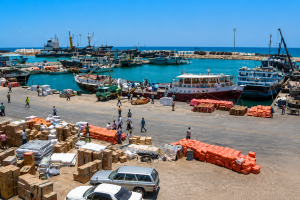
Kismayo — the southern gateway
Kismayo Port provides a strategic maritime connection for southern Somalia and Jubaland, underpinning regional trade and logistics for one of the country’s most agriculturally productive corridors.
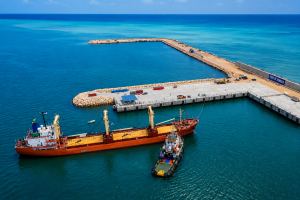
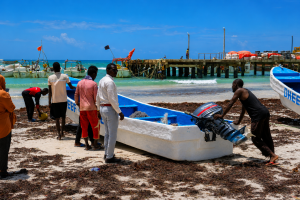
Garacad and Hobyo — the next coastal frontier
Garacad is being developed as an emerging commercial gateway for central Somalia, with ambitions around cargo handling, logistics and inland connectivity, while Hobyo and other coastal facilities add another dimension to a network that is not static but actively evolving. Together they signal that Somalia’s port development is expanding along the coastline, not just deepening at existing sites.
Port |
Role |
Key facts (2026) |
|---|---|---|
| Mogadishu | National gateway | Largest, most vital harbour; handles 15 million tonnes of cargo and over 70% of the containers moving in and out of the capital. New terminal lifted container capacity to roughly 250,000 TEUs. |
| Berbera | Regional & transit hub | Operated by DP World under a $442 million concession; container capacity expanded from 150,000 to 500,000 TEUs, with a second phase targeting 2 million TEUs. Anchors the Berbera Economic Zone and the Berbera Corridor to Ethiopia. |
| Bosaso | Puntland gateway | Historic hub for livestock exports and Gulf of Aden trade; key commercial link for Puntland’s economy. |
| Kismayo | Southern gateway | Strategic maritime connection for southern Somalia and Jubaland, supporting regional trade and logistics. |
| Garacad | Emerging gateway | Under development as a commercial gateway for central Somalia, with planned cargo-handling, logistics and inland-connectivity functions. |
| Hobyo | Emerging facility | Coastal facility in early-stage development, part of the widening central-coast port network. |
| New Mogadishu Maritime Port (NMMP) | Next-generation greenfield port | Planned ~35 km north of Mogadishu under the New Mogadishu Development Corporation; envisaged capacity of roughly 1.2 million TEUs and 5 million tonnes of general cargo, with an adjoining Special Economic Zone. |
Why This Matters for the Blue Economy
A port becomes economically transformative when it connects infrastructure to productive value chains, rather than functioning as a standalone piece of engineering.
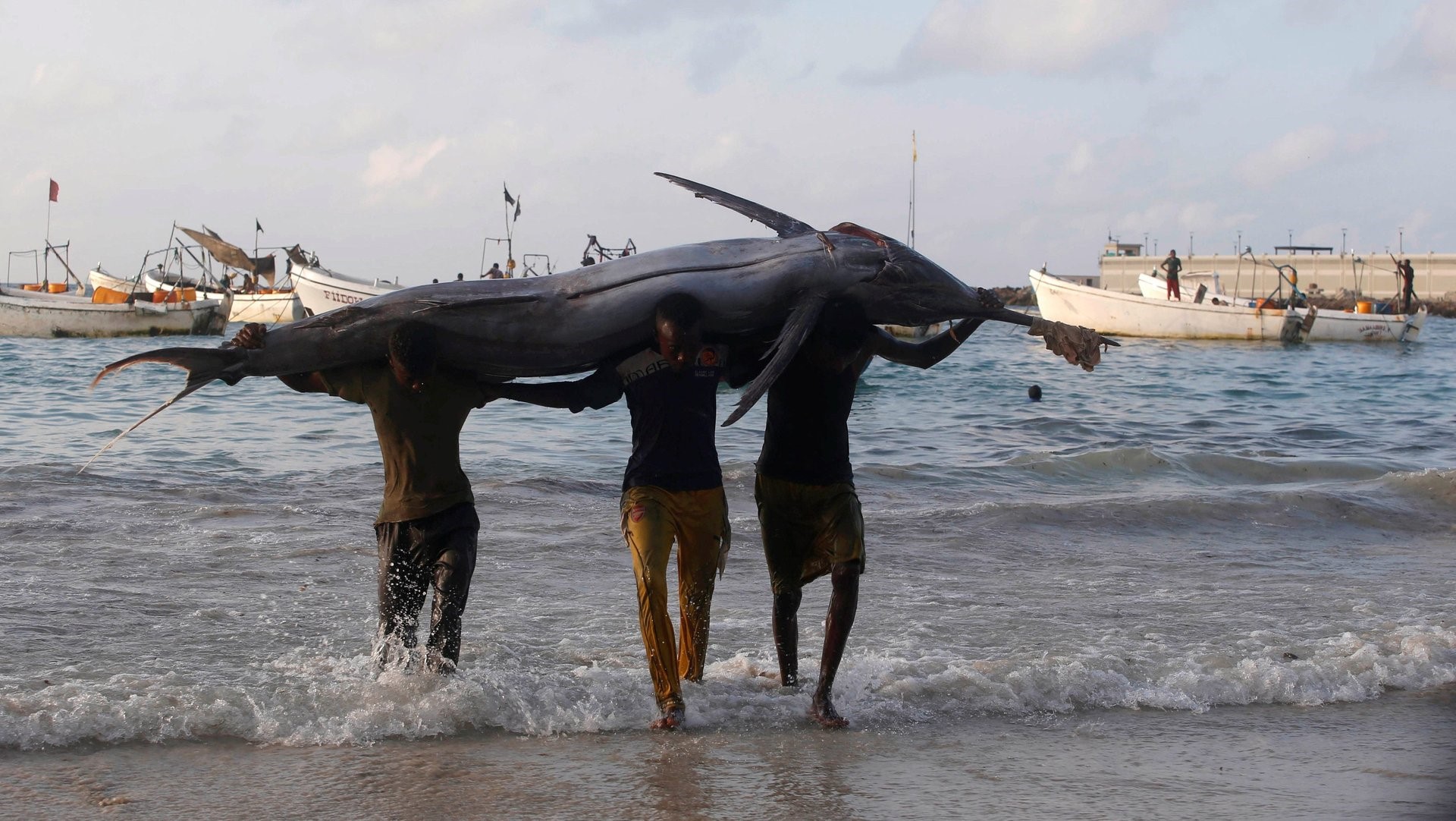
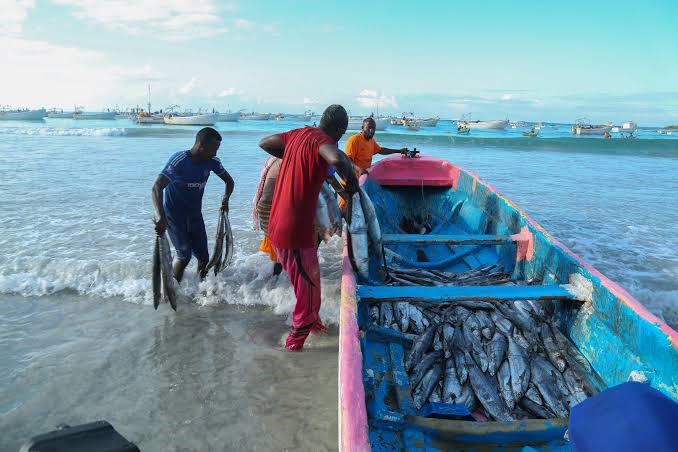
- For fisheries: landing facilities, ice and cold storage, processing, transport and reliable access to domestic and export markets.
- For trade: efficient cargo handling, customs, warehousing and connections to roads and inland markets.
- For logistics: integration of ports with transport corridors, distribution networks and digital systems.
- For investment: an environment where private capital can participate in infrastructure, maritime services, logistics, industrial activity and coastal enterprise.
With approximately 3,333 kilometres of coastline, Somalia carries significant untapped potential across fisheries, maritime services and other blue-economy activities — potential that remains only partially realised while landing, cold-chain and processing infrastructure lags behind port development.
The Next Challenge: Moving Beyond Infrastructure
The central question is not simply how many ports Somalia has. It is how much economic value those ports generate around them. A port can have cranes, berths and warehouses and still produce limited economic impact if cargo cannot move efficiently inland, fish cannot be preserved and processed, customs systems remain slow, or surrounding businesses lack access to reliable infrastructure and services.
Somalia therefore needs to think of ports as economic platforms, not isolated construction projects — which means deliberately connecting port development with:
- Fisheries and seafood value chains
- Cold-chain and storage infrastructure
- Trade and logistics services
- Road and future intermodal connectivity
- Special economic and industrial zones
- Maritime services and skills development
- Digital customs and logistics systems
- Private-sector investment and public-private partnerships
The U.S. Commercial Service has similarly identified additional berths, logistics support, cargo storage, cold-chain infrastructure and management services as priority areas for port development in Somalia — an assessment that lines up closely with what the ports themselves are now signalling through their own expansion plans.
A New Generation of Maritime Infrastructure
The proposed New Mogadishu Maritime Port (NMMP) illustrates how the next generation of port development could extend well beyond traditional port operations. Planned roughly 35 kilometres north of the capital and structured through the New Mogadishu Development Corporation, NMMP is envisaged as a greenfield development built to relieve congestion at the existing port and establish a substantially larger trade gateway — with projected capacity of around 1.2 million TEUs and 5 million tonnes of general cargo, alongside container and bulk handling, smart customs, warehousing and logistics systems, and an adjacent Special Economic Zone.
The project sits within a broader New Mogadishu development agenda that also includes a new airport and major commercial infrastructure, and it is emerging alongside deepening maritime partnerships — including continued Turkish investment in port operations and modernization, and a new agreement with Saudi Arabia covering port development, maritime transport and investment promotion. Parallel institutional reforms, including the revival of Somalia’s national ship registry after more than three decades of inactivity, point to a maritime sector that is rebuilding its rules and institutions in step with its infrastructure — a signal investor read as closely as the engineering plans themselves.
This points toward a broader opportunity for Somalia: integrating ports with the wider economy rather than treating them as endpoints. The objective should be to create maritime corridors in which goods, services, capital and information move efficiently between the ocean, ports, businesses, cities and inland markets.
The OPONE Perspective
Somalia’s maritime advantage is real — but geography alone does not create prosperity. Ports create the gateway. Value chains create the economic impact.
For Somalia to build a competitive blue economy, investment in port infrastructure must be matched by investment in fisheries, logistics, cold chains, transport connectivity, maritime services, skills and governance. The opportunity is therefore not simply to build bigger ports. It is to build stronger maritime economies around them.
At OPONE, we work to explore how Somalia can convert its maritime assets, infrastructure and strategic location into productive, sustainable and inclusive economic value — through research, policy engagement and enterprise.
OPONE — Where Ocean Meets Opportunity.
Sources: Somalia Ministry of Ports and Marine Transport; Mogadishu Port Authority; Somali Ports Authority; DP World / Berbera Port and Berbera Economic Zone; New Mogadishu Development Corporation (NMMP); U.S. Commercial Service.