OPONE | 6 November 2026
Somalia’s ocean economy represents an opportunity that extends far beyond fisheries. OPONE is building a business around that wider opportunity—starting with fisheries enterprise, strengthening access to ocean knowledge and pursuing responsible coastal development.
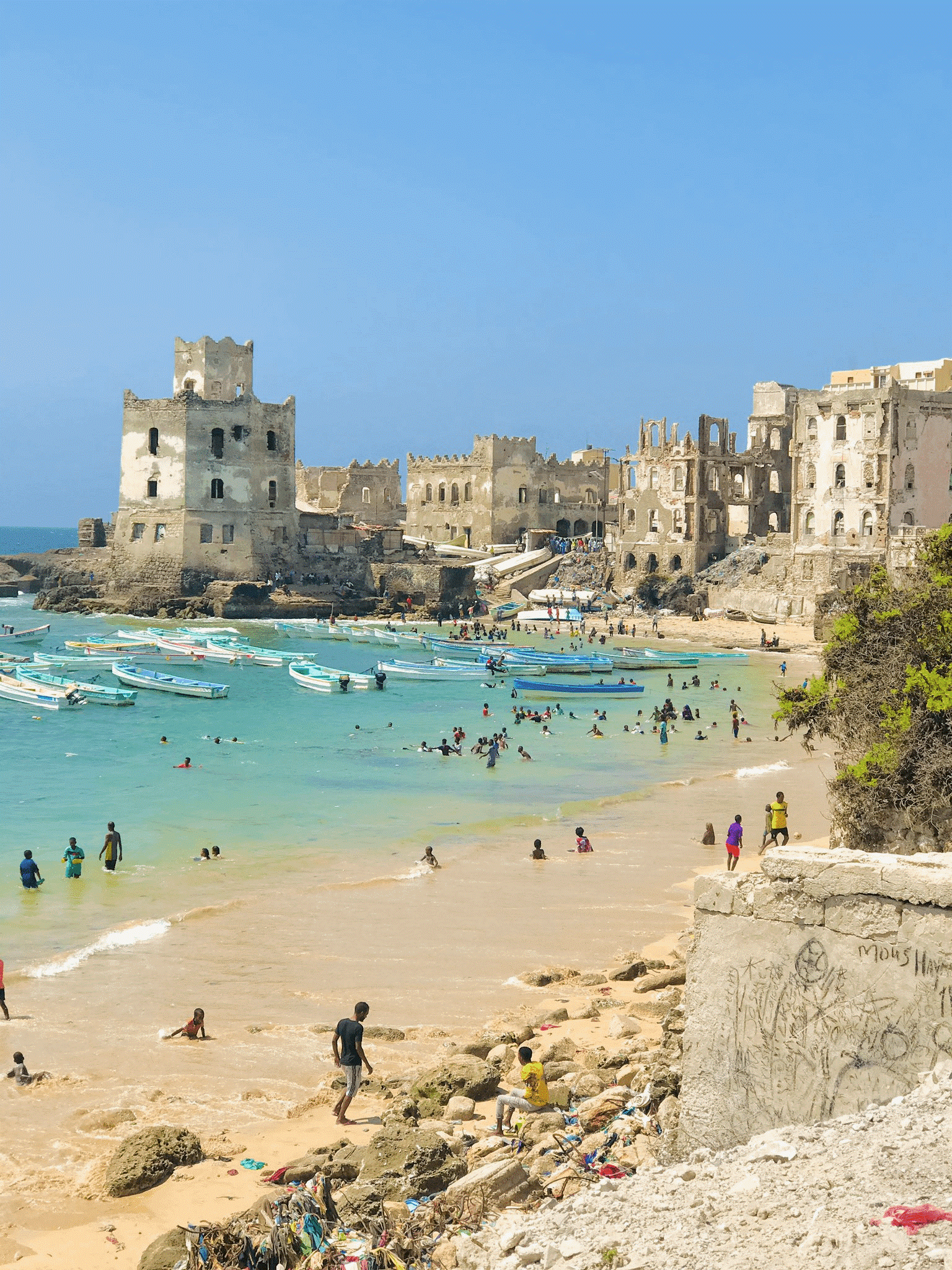
Somalia’s relationship with the ocean is deeply rooted in its history, geography and livelihoods. Its coastline connects the country to major Indian Ocean trading routes, supports fishing communities and sustains marine ecosystems of considerable economic and environmental importance.
Yet the question facing Somalia is not simply how much opportunity exists along its coast. It is how that opportunity can be translated into productive businesses, stronger markets, accessible knowledge and lasting value for coastal communities.
This is the vision behind OPONE.
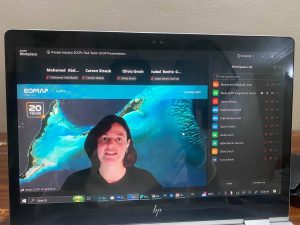
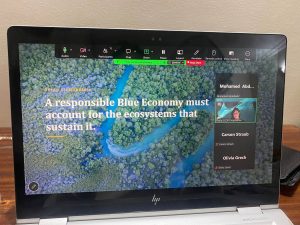
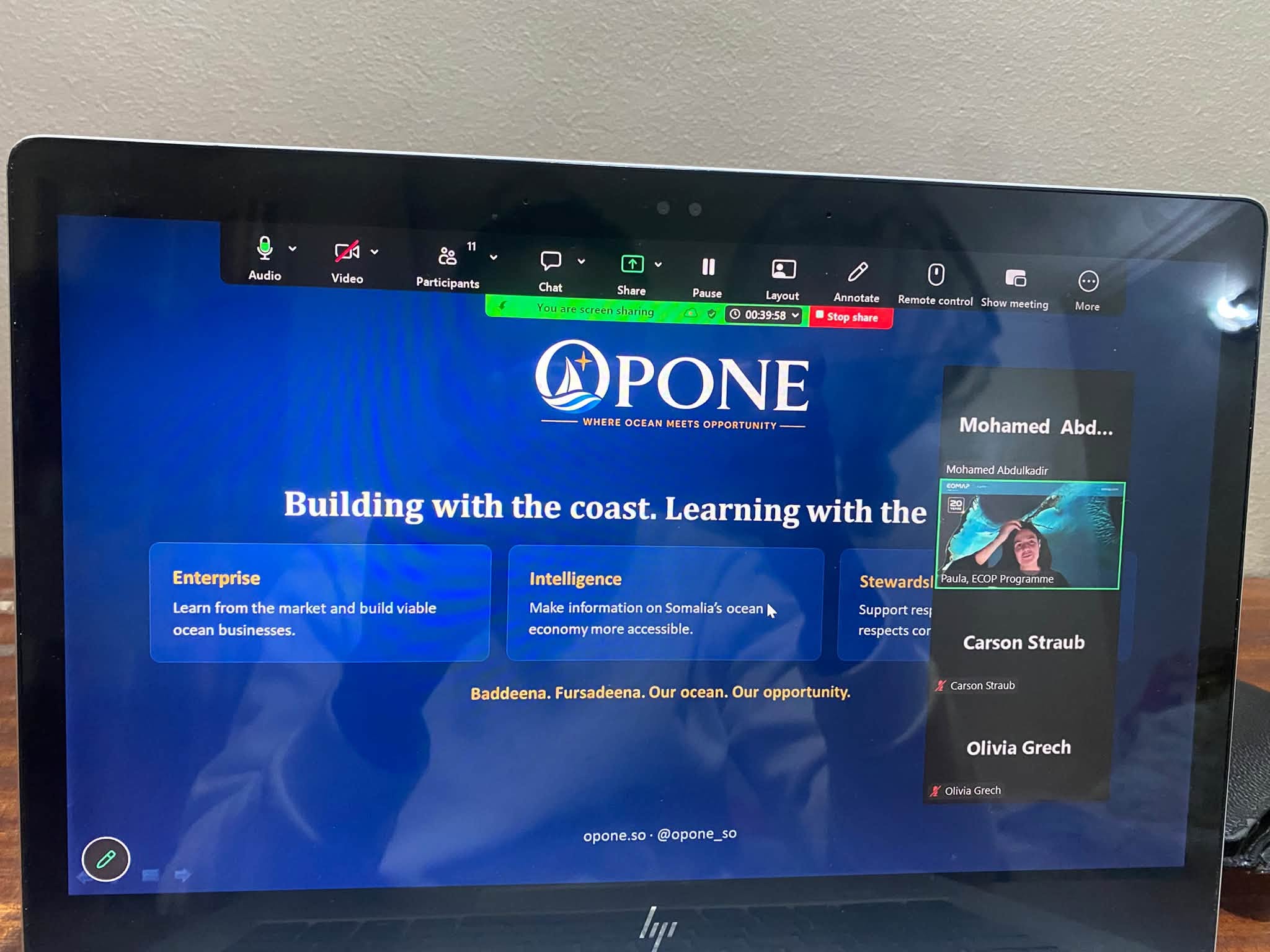
On 6 November 2026, OPONE Chairman Mohamed Osman shared the company’s perspective on building Somalia’s Blue Economy during an engagement with the Private Industry Early Career Ocean Professionals (ECOPs) Task Team. Under the theme Building Somalia’s Blue Future, the discussion presented OPONE’s understanding of the opportunity, its emerging business model and the work it is undertaking to contribute to a more connected and productive ocean economy.
Reimagining the value of Somalia’s ocean
OPONE’s ambition begins with a broader understanding of the Blue Economy. Fisheries are an important starting point, but the ocean economy also encompasses maritime trade, logistics, seafood markets, ocean intelligence, coastal ecosystems and the communities whose livelihoods depend on them.
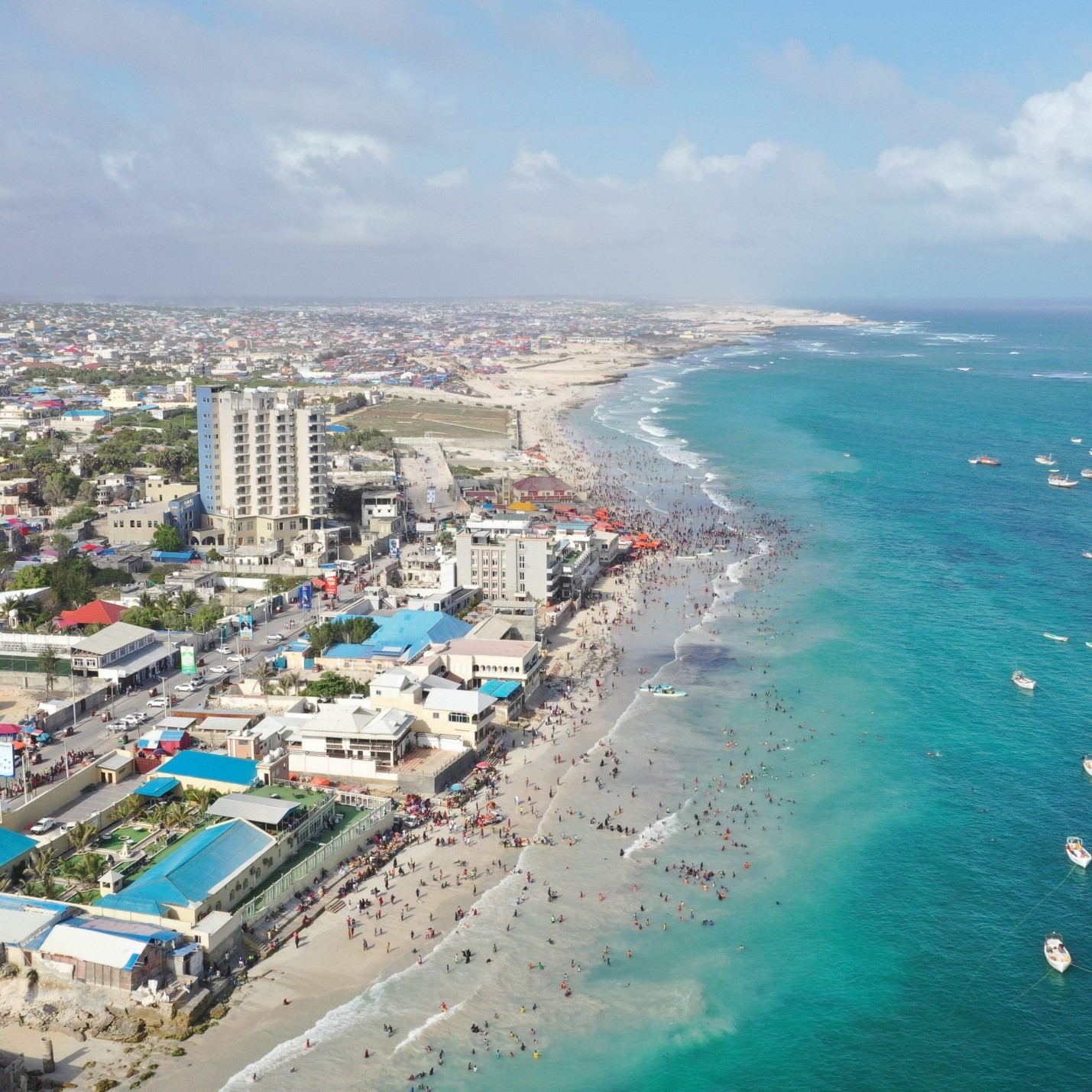
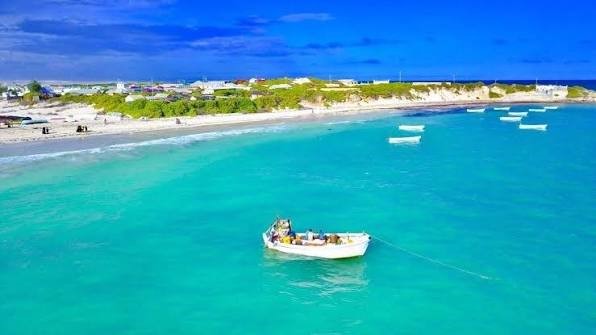
Somalia’s more than 3,300 kilometres of coastline place it along an important maritime corridor connecting the Gulf of Aden, the Red Sea–Suez route and the Western Indian Ocean. Its ports, landing sites and coastal settlements form part of a wider economic landscape with potential across several interconnected sectors.
However, geographical advantage does not automatically translate into economic competitiveness. Value must be created through functioning enterprises, reliable supply chains, market connections, investment, information and responsible resource management.
OPONE sees an opportunity to contribute to this process by building practical ocean businesses while developing the knowledge and partnerships needed to support their growth.
The company’s name reflects this ambition. Inspired by Opone, the ancient trading emporium associated with present-day Hafun, OPONE draws on Somalia’s maritime heritage while looking towards a modern economy built around ocean enterprise and connectivity.
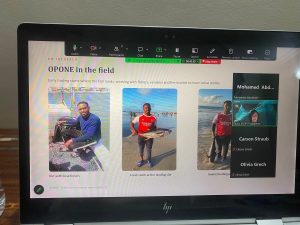
Building from the market: fisheries as the starting point
OPONE is beginning where it can engage directly with the economy: the fisheries market.
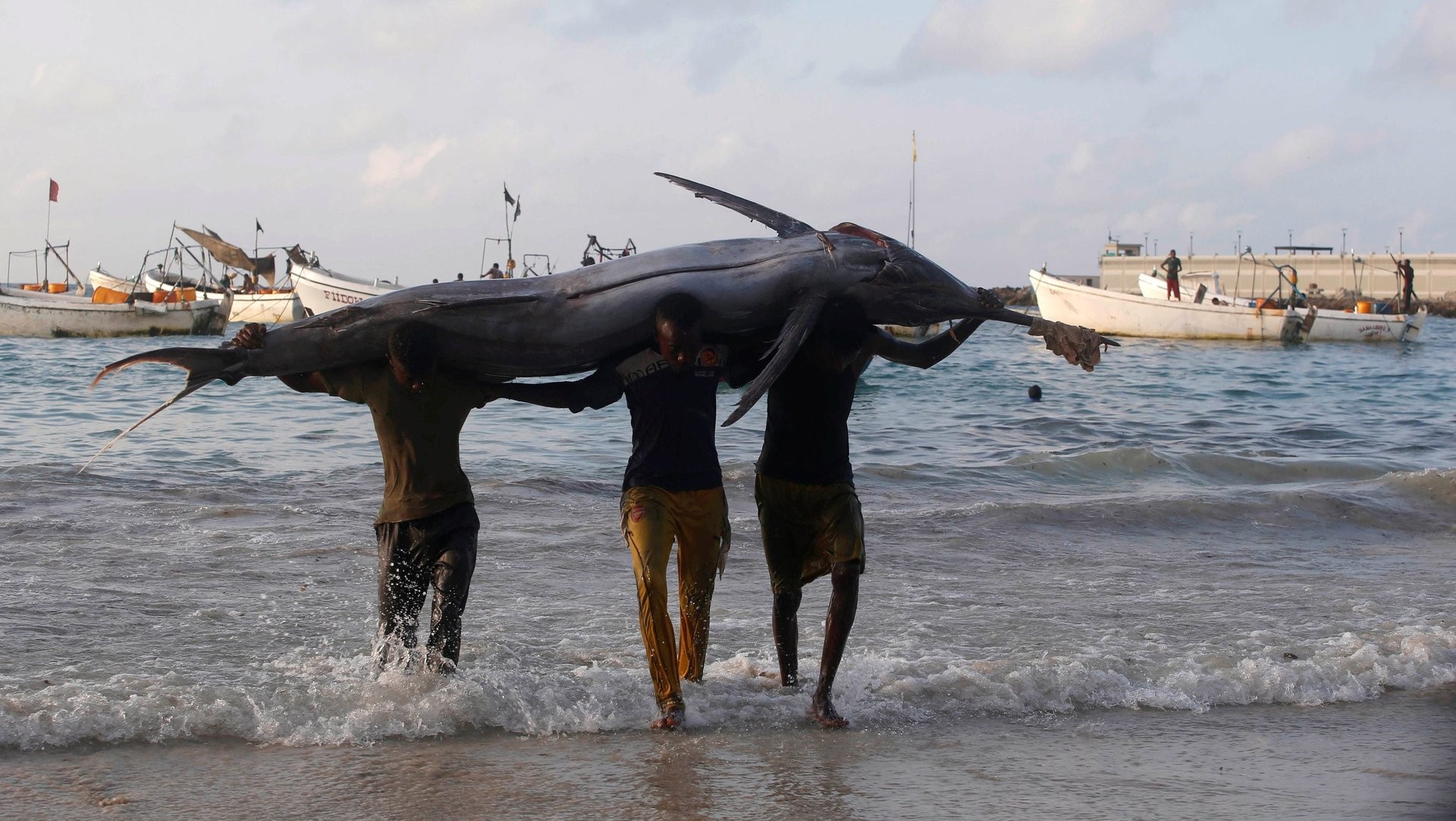
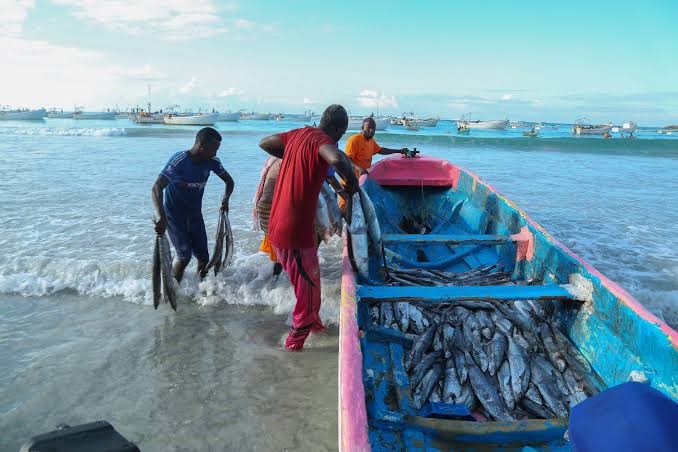
Its current activity involves sourcing fish from local fishers and supplying market vendors and restaurants. This provides a practical way to understand the commercial realities of the sector, including supply availability, customer demand, pricing, product quality, transportation costs and trading margins.
The decision to start with market transactions is intentional. Rather than build an ambitious infrastructure model before understanding its economics, OPONE is learning through actual business activity and testing what can become commercially repeatable.
The longer-term ambition is to develop a more connected fisheries enterprise, linking access to supply with aggregation, handling, preservation and distribution.
This is a staged development pathway. The company intends to build towards a first fishing vessel, a fish aggregation hub, improved handling and cold-chain capacity, and stronger distribution channels. OPONE GO is envisioned as a future ordering and market-access channel connecting fish supply with buyers.
These are development priorities, not claims of completed infrastructure. Their progression will depend on market validation, investment, operational capacity and the right partnerships.
For OPONE, the objective is to build a viable enterprise that participates more effectively in the fisheries value chain while creating stronger connections between fishers, markets and consumers.
Making ocean intelligence part of the economy
A productive ocean economy also requires knowledge.
Businesses need to understand markets and resources. Policymakers need reliable evidence. Investors need information to assess opportunities and risks. Coastal communities need accessible knowledge about the ecosystems and economic activities that shape their livelihoods.
This is why OPONE is developing Ocean Insights as a knowledge platform focused on Somalia’s Blue Economy.
Through research, editorial analysis and monthly Maritime Briefs, Ocean Insights examines the issues shaping the country’s ocean economy. Its work has explored fisheries value chains, blue carbon, coastal renewable energy, marine habitats, maritime infrastructure and emerging investment opportunities.
The purpose is not simply to publish information. It is to make complex ocean-related issues more accessible and connect research, policy, markets and enterprise.
The platform reflects OPONE’s belief that ocean intelligence should become a practical resource for those making decisions about Somalia’s maritime future.
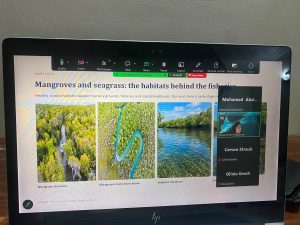
Growing responsibly with coastal communities
Economic opportunity cannot be separated from the condition of the ecosystems that support it.
Mangroves, seagrass meadows and coral reefs contribute to marine biodiversity, fisheries productivity and coastal resilience. Their ecological importance makes them relevant not only to conservation but also to the long-term sustainability of ocean-based livelihoods.
OPONE is exploring this relationship through early-stage engagement around mangrove and seagrass ecosystems in the Kismayo area and the wider southern Somali coast. Its Memorandum of Understanding with the Lag Badana Community Conservancy Trust provides a basis for engagement with local conservation partners and communities.
The company’s interests include learning from local ecological knowledge, documenting coastal ecosystems and understanding the links between habitats, fisheries and livelihoods.
Blue carbon is also an area of interest, but it requires credible ecological assessment, measurement and governance. OPONE does not claim verified carbon outcomes or completed restoration through this early-stage engagement.
The principle is straightforward: the development of ocean-based businesses should recognize the natural systems and communities on which their long-term viability depends.
An interconnected approach to building the Blue Economy
OPONE’s vision brings together four connected areas of work:
Fisheries enterprise development — building practical commercial activity through fish sourcing, trading and the progressive development of fisheries operations.
Market access and value chains — strengthening connections between suppliers, buyers and distribution channels, while exploring the infrastructure and services required to move seafood efficiently.
Ocean Insights and maritime intelligence — researching and communicating developments in Somalia’s ocean economy to support informed decisions by businesses, institutions and other stakeholders.
Coastal communities and ocean stewardship — engaging with communities and conservation partners to promote an approach to development that accounts for ecosystems and local livelihoods.
These areas are not separate ambitions. They are connected parts of a wider approach: commercial activity creates practical market experience; intelligence helps identify opportunities and constraints; partnerships support implementation; and stewardship helps ensure that economic activity remains connected to the health of the ocean.
Partnerships to turn opportunity into progress
No single enterprise can build a national Blue Economy ecosystem alone.
Somalia’s progress will require collaboration among private businesses, public institutions, research organisations, investors, development partners and coastal communities.
For OPONE, practical areas for collaboration include seafood markets and processing, cold-chain logistics, ocean observation and maritime data, investment in viable operating models, and research and conservation partnerships.
The company’s engagement with the Private Industry ECOPs Task Team provided an opportunity to share this perspective with participants working across ocean-related fields. It also reinforced the importance of connecting emerging private-sector initiatives with wider professional networks, expertise and partnerships.
OPONE is building from an early stage, with a clear understanding that ambition must be matched by execution. Its immediate priorities are to learn from the fisheries market, strengthen its Ocean Insights platform and develop responsible coastal partnerships. Its longer-term ambition is to grow into a connected ocean enterprise contributing to Somalia’s wider Blue Economy.
Our ocean. Our opportunity.
Somalia’s maritime future will not be determined by its coastline alone. It will depend on the ability to turn natural assets and geographical advantages into productive economic activity, stronger institutions, informed decisions and opportunities that benefit coastal communities.
OPONE’s contribution is to build from the private sector: developing fisheries enterprise, making ocean knowledge more accessible and pursuing responsible opportunities across the wider ocean economy.
The journey is still underway. But the direction is clear: a future in which Somalia’s ocean is not viewed only as a resource to be used, but as an economic system to be understood, developed and managed responsibly.
OPONE — Where Ocean Meets Opportunity.
Baddeena. Fursaddeena. Our ocean. Our opportunity.